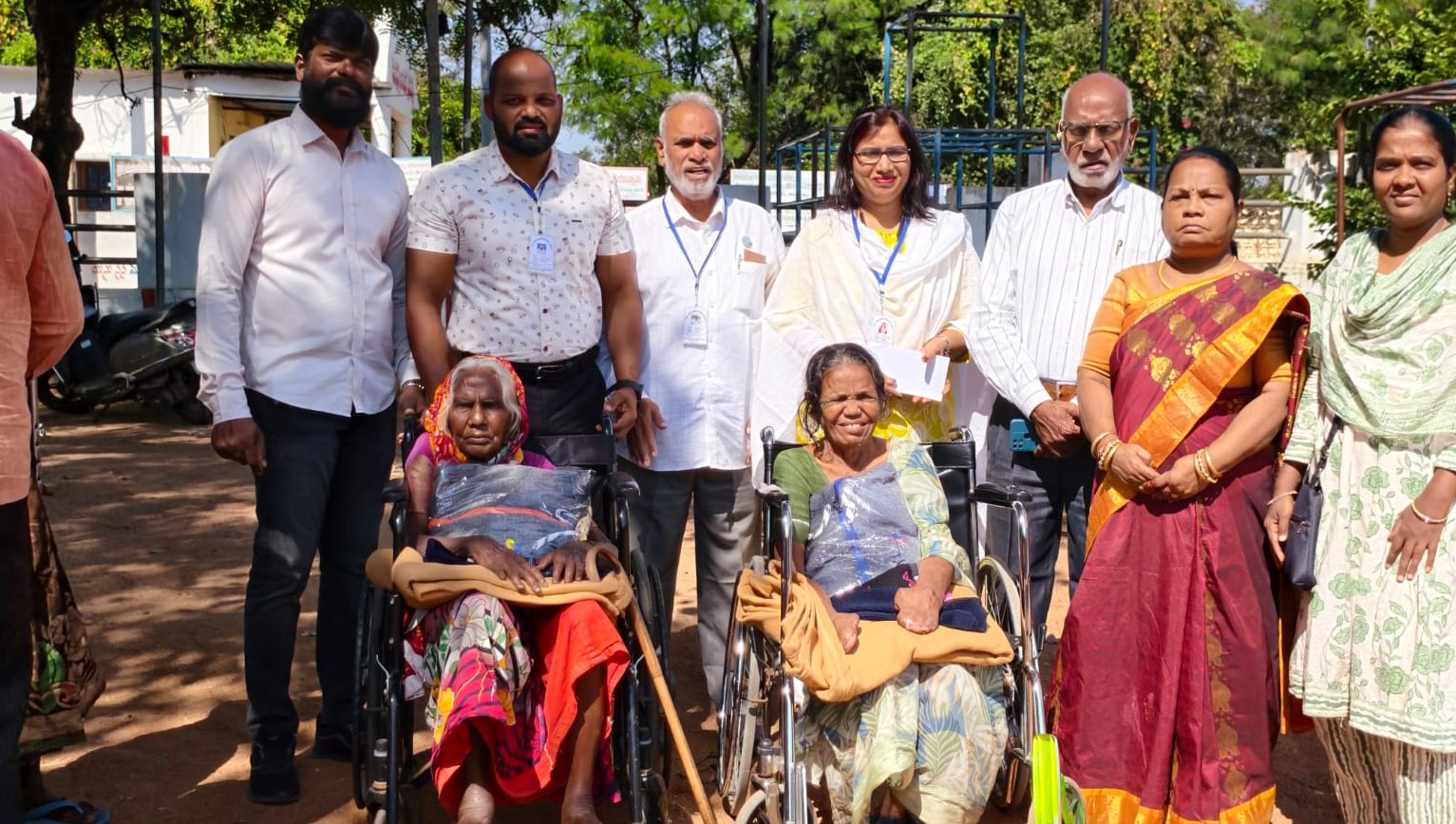
“Persons with disabilities — physical, intellectual, or developmental — deserve lives of full participation, not passive existence on the edges of society.”
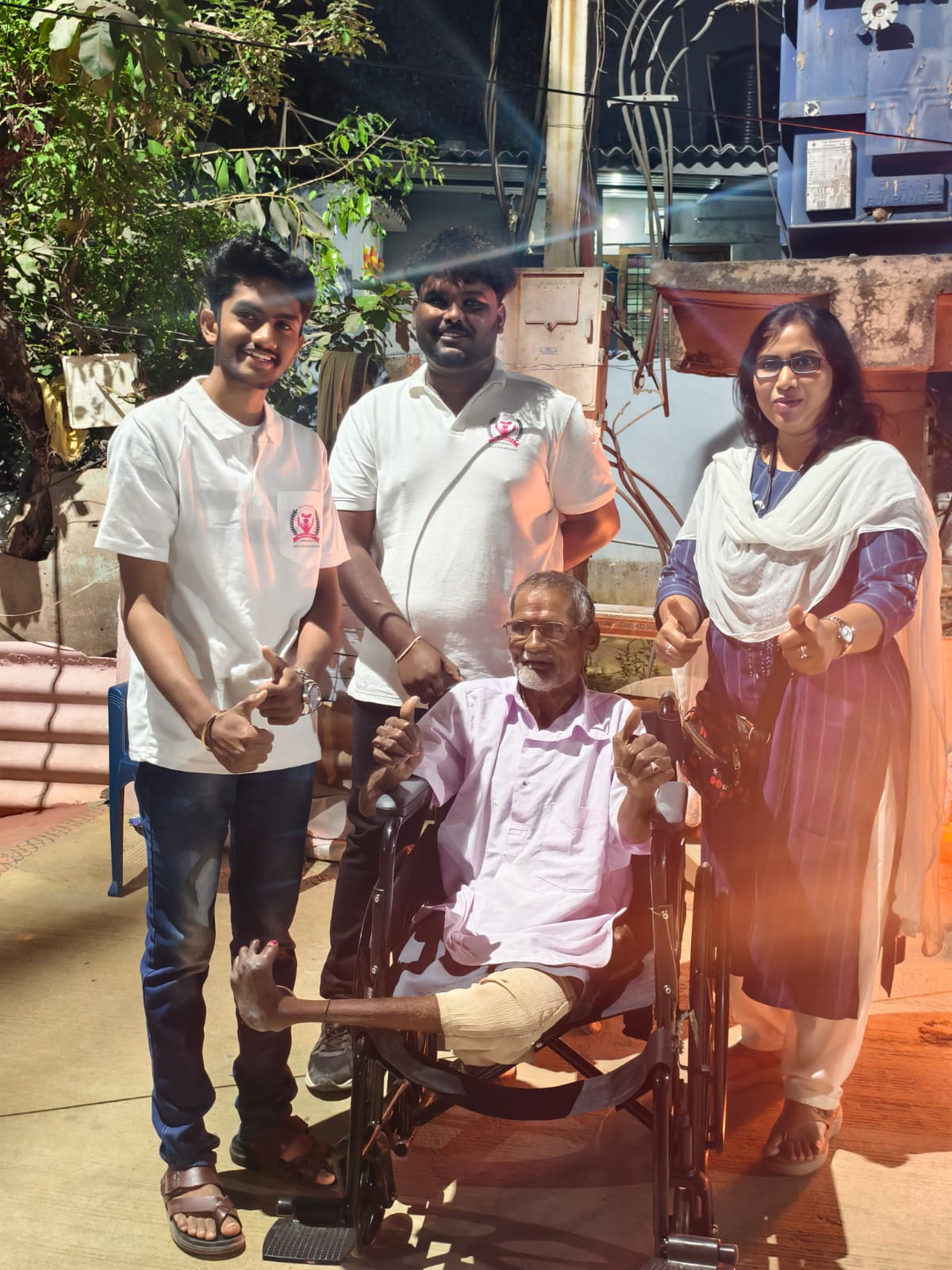
At Smile With Shine Welfare Society, our Disability Inclusion & Support intervention is one of the twelve communities we walk alongside. It shows up in different forms on different days — a wheelchair for someone who has been dragging themselves to the door for years, a ration pack for a family that has been budgeting food around a caregiver’s absence, a home visit to a person who does not get out much, and — where possible — a route back into the parts of everyday life that were quietly closed off.
This post is a short look at that work — the what, the why, and the ways any supporter can be a part of it.
Why Disability Inclusion Is a Whole-Society Problem
Persons with disabilities in India face barriers on almost every axis of ordinary life — housing that assumes stairs, transport that assumes stride, employment that assumes constant availability, healthcare that arrives only when things go wrong. For many families, disability is not a single event; it is a slow rearrangement of the whole household around what one member can and cannot do.
Across our communities in Hyderabad, we see the same picture again and again:
- Elderly individuals with limited mobility who have been indoors for years because there is no wheelchair in the house.
- Persons with intellectual or developmental disabilities whose families care deeply but have no institutional support to lean on.
- Differently-abled adults who are ready to work but have never been given a real accessible opportunity.
- Caregivers — parents, siblings, spouses — who are quietly running two lives at once, with almost no help.
Disability inclusion is not one intervention. It is a stance — the working assumption that every person we meet is a full participant, not a project.
The Work, in Numbers
| Programme | How Often | Reach |
|---|---|---|
| Wheelchair & mobility aid distribution | Sponsor-led drives | Individuals on the follow-up list |
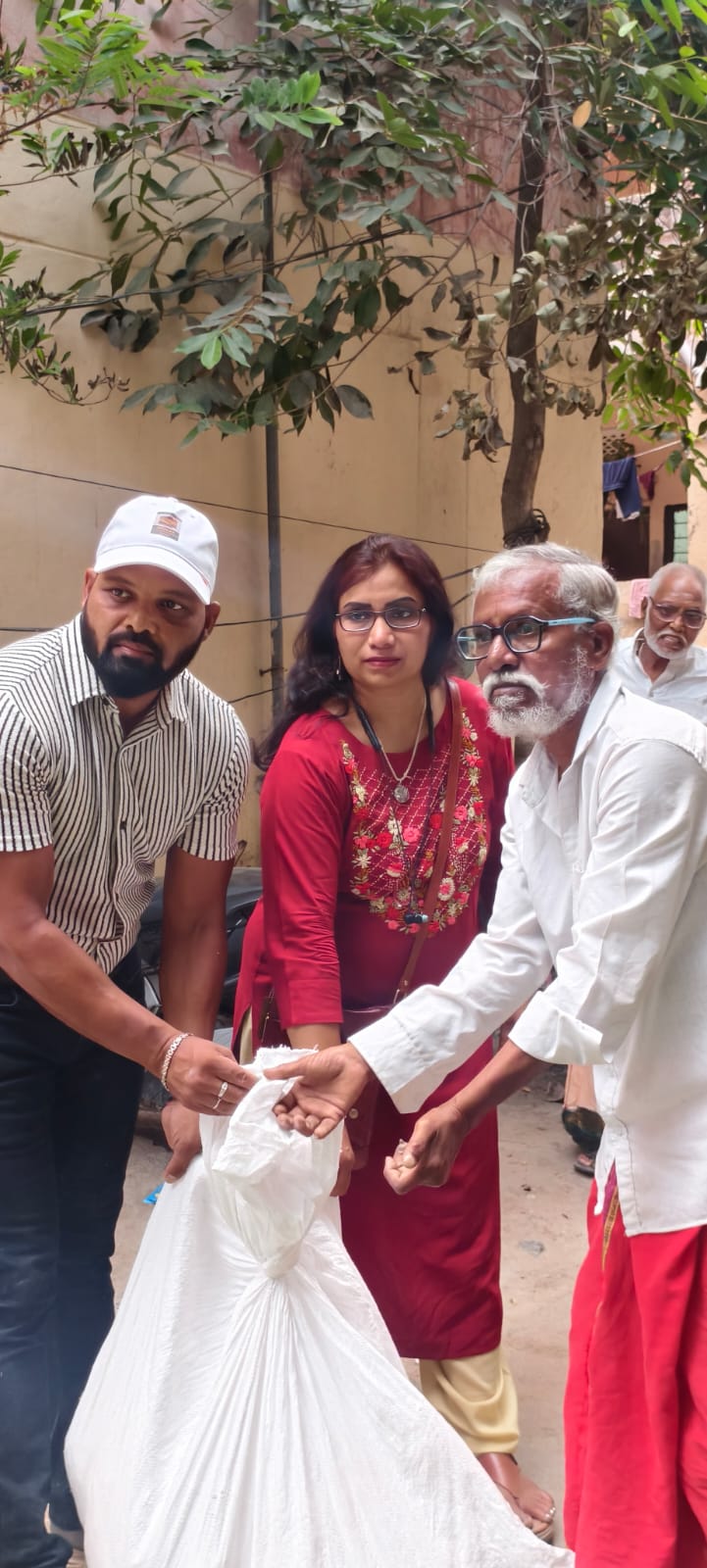
| Ration & essentials for differently-abled households | Regular cycles | Families in partner communities |
| Home visits | Year-round | Persons who cannot easily attend a drive |
| Community outreach & awareness | Continuous | Neighbourhoods and partner colonies |
| Referral & family support | On need basis | Caregivers and dependents |
No inflated numbers. No “lives touched” statistics. Just the same door reached, the same conversation begun, the same follow-up kept — over time.
What a Disability Inclusion Visit Looks Like
Every case is different. Every family is different. The programme has no single template, but a typical visit looks like this:
- A referral or a phone call — often from a family member, a community leader, or another intervention team who spotted the need.
- A first visit — no supplies, no camera. We listen. We ask what the household actually needs.
- A matched response — a wheelchair, a walking aid, a ration commitment, a set of essentials, a school kit for a differently-abled child, whatever fits.
- A handover — done at home where possible, so the person is not asked to travel just to receive support.
- Follow-up — a call the next week, a visit next month, the same name on our list.
The point is not the object we hand over. The point is that a door that had been closed is now open, and that the family knows we will come back through it.
Where Disability Inclusion Overlaps With Our Other Work
Disability Inclusion rarely lives in isolation. It sits inside the wider fabric of our year-round programmes:
- Elderly Care — a large share of the mobility aids we distribute go to elderly individuals whose disability is age-related. Elderly care and disability inclusion are, in practice, the same afternoon at the same house.
- Homeless Welfare — persons with disabilities are over-represented among the men and women we meet at coolie addas and roadside gathering points on our Tuesday Breakfast Drives.
- Community Learning Centres — for differently-abled children who have been kept out of school for reasons of access, a CLC seat is often the first step back into learning.
- Family & Livelihood Support — supporting a caregiver often looks like supporting the whole household, not just one member. Our sewing-machine and livelihood work has repeatedly reached families where a differently-abled child is one of the reasons the household is under pressure.
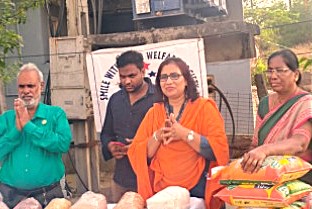
The People We Walk With
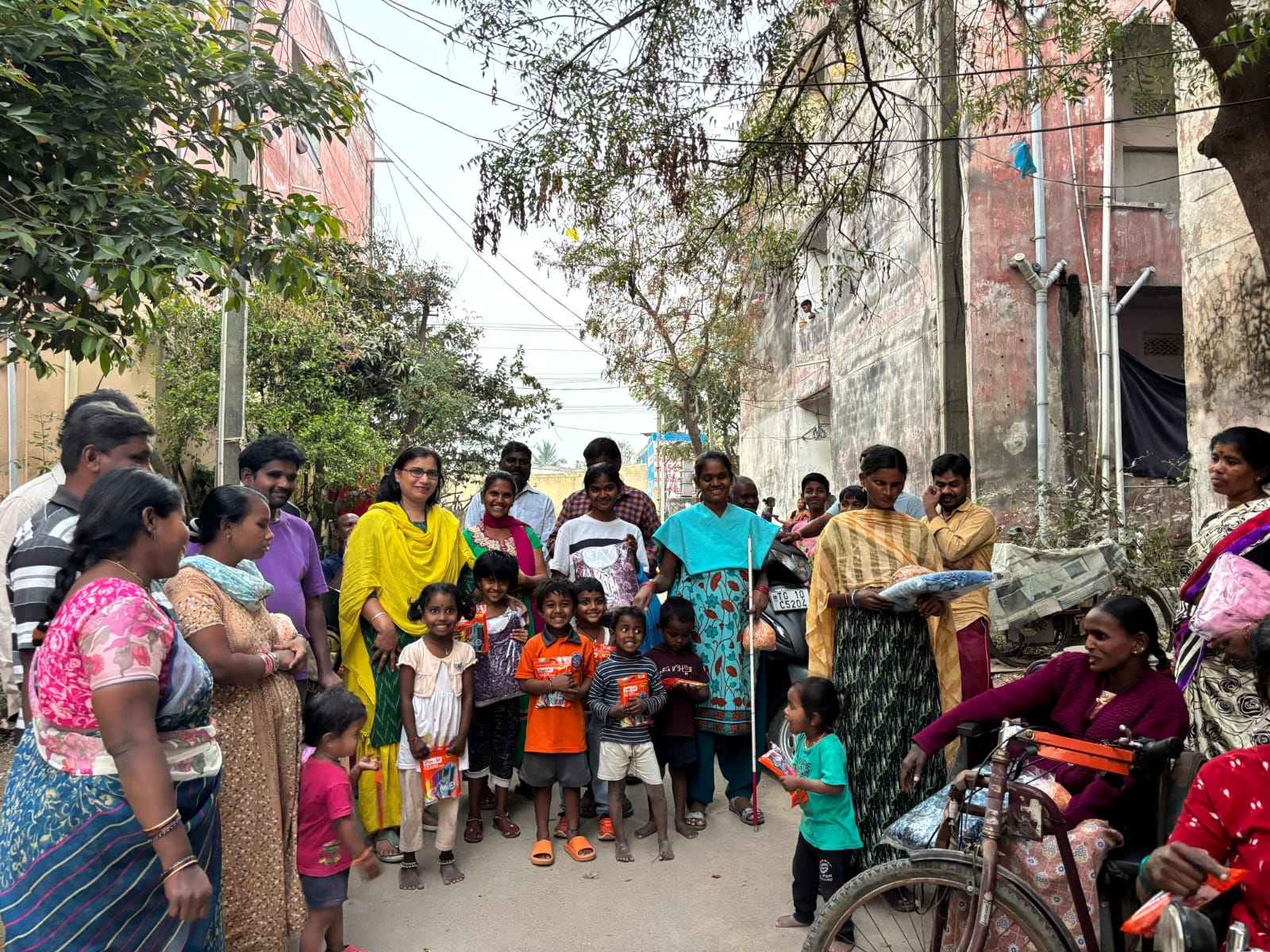
Behind every wheelchair and every ration pack is a specific person. Broadly, the people we serve include:
- Elderly persons with age-related mobility loss — often housebound for years, sometimes for lack of a wheelchair, sometimes for lack of a ramp.
- Adults with physical disabilities — post-accident, post-illness, or lifelong — who are ready to move through more of the city than they currently can.
- Persons with intellectual or developmental disabilities and their caregivers, who often carry very little institutional weight behind them.
- Differently-abled children and their families, for whom access to school, materials and learning support are the difference between a full childhood and a shrunk one.
We do not treat any of them as beneficiaries of a programme. We treat them as neighbours. That is the whole difference.
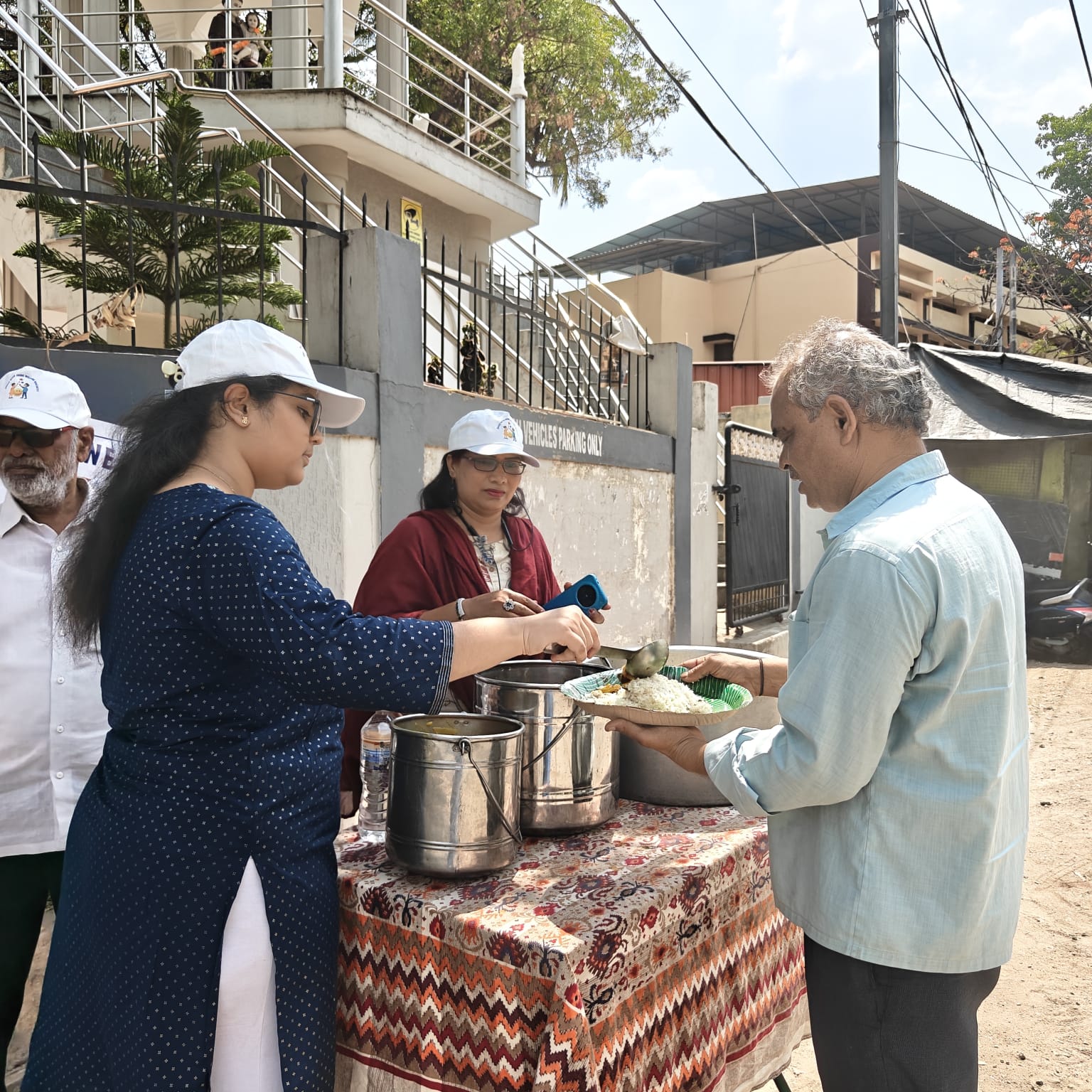
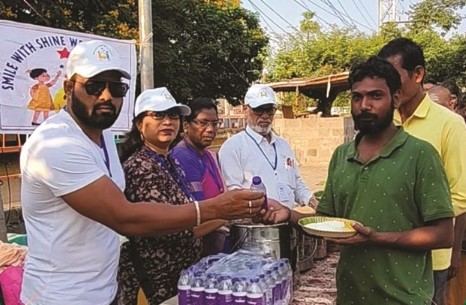
Who Runs It
Every Disability Inclusion visit is led personally by our senior team:
- Smt. Grace Mani — Founder (recipient of the Bharatiya Seva Ratna National Award).
- Sri. Gangarapu Satyapal — General Secretary.
- Sri. Lazarus — Treasurer.
- Smt. Mary — Advisor.
Alongside a volunteer team who source aids, coordinate handovers, drive to homes, and sit down inside the family’s living room for as long as the visit needs. The people who plan the work on paper are the people who deliver the wheelchair on the ground.
How You Can Support Disability Inclusion
There is no fixed template and no minimum contribution. Supporters have joined this work in many forms:
- Sponsor a wheelchair for one person on the follow-up list — the highest-impact single item we distribute.
- Sponsor a walking aid, stick or crutch where a wheelchair is not what the person needs.
- Sponsor a month of ration for a differently-abled household.
- Sponsor a birthday, anniversary or memorial by hosting it as a home-visit round — full explainer at Celebrate With A Purpose.
- Volunteer with the team — help with sourcing, coordination, or come along on a home visit.
How to give — UPI or bank
GPay / PhonePe to +91 73960 96830 or +91 70937 37459. Or visit the donate page for QR codes and bank details. Mention “For Disability Inclusion” in the note.
Tax benefit
“Contributions of ₹500 and above will get a receipt, where you can claim income tax returns.” — Donate page
Frequently Asked Questions
Wheelchair and mobility-aid distribution, ration and essentials for differently-abled households, home visits, community outreach and awareness, and referral support for caregivers and dependents.
Call +91 73960 96830 and the team will share the current cost and match your contribution to a person on the follow-up list. UPI transfer to +91 73960 96830 or +91 70937 37459 with the note “For a wheelchair” also works.
Yes. Please call and the team will describe the case and confirm the family is comfortable being sponsored. Monthly ration commitments for a specific household are especially welcome.
Yes. Sourcing aids, coordinating handovers, driving to a home visit, and simple presence at a family’s doorstep are all welcome. Even a single afternoon helps.
A distribution drive gathers many people at one place; a home visit is one household, at their door. For persons with limited mobility, the home visit is often the only way our support reaches them at all.
Yes. Where a differently-abled child needs a school kit, learning support at one of our Community Learning Centres, or a supporting item at home, that support is arranged alongside our education work.
Be a Part of the Next Visit
Every Disability Inclusion visit begins because a supporter or a volunteer said yes. If any of this matched something in your heart, the next visit is only a phone call away.
Donate via UPI: GPay / PhonePe → +91 73960 96830
📍 Smile With Shine Welfare Society, Vivekananda Nagar, Mallapur, Nacharam, Secunderabad, Hyderabad — 500076
☎ +91 73960 96830 | +91 70937 37459
Explore More on Our Site
- Where the Classroom Comes to the Child — Community Learning Centres Across Hyderabad
- Old Age Is a Season, Not a Sentence — Elderly Care Across Hyderabad
- A Stethoscope Appeal for K. Manjula (BPT) & a Follow-Up Visit to Sruthi’s Family
- Drives, Campaigns & Communities — A Round-Up of Our Work Across Hyderabad
- A 10-Month Prayer Answered — Sewing Machine for a Needy Family
- Celebrate With A Purpose — Sponsor a Meal on Your Special Occasion
- Grace Mani — Bharatiya Seva Ratna National Award
- All 12 Interventions
- Monthly Programmes
- Photo Gallery
- Donate